

Jo Jones — The Swim She Nearly Cancelled
A book read during furlough, a second chance at the weather and a record-setting arrival at Clevedon
An hour to change her mind
On the Saturday before her Bristol Channel swim, Jo Jones rang the pilot and cancelled. The forecast was cold and the northerly wind had strengthened. She had already lost one opportunity that September; now she was turning down another. An hour later, regretting the decision, she called back. The boat, observer and hotel room were still available. She would try. [1]
The following afternoon, Jo was on the slipway at Clevedon after swimming from Penarth in 5 hours 27 minutes 57 seconds. The MSF documented-swim page marked it as a course record. Between the two telephone calls and that finish lay a story of uncertainty giving way to a swim taken one feed at a time. [1]
A book opens a channel
The idea had taken shape during furlough. Jo read Alec Richardson’s Ask Me Why I’m Stood Here, his account of swimming to Clevedon in 2017, and contacted him. Her husband lived in Bristol; the prospect of arriving near family and friends gave this particular finish a personal pull. [1]
Finding a way to arrange the swim was less straightforward. In her account, the Bristol Channel’s scattered histories, differing route descriptions and elusive pilot information made it something of a mystery. She eventually reached Ceri Davies through a swimming group and booked a September opportunity. [1]
She was an experienced swimmer already. Her narrative places a Channel relay in 2010, Windermere in 2016 and an English Channel solo in 2017. After the interruption of lockdown, she built her Bristol preparation through increasingly long lake swims and time in Clevedon’s tidal water. A familiar sport had acquired a new, local destination. [1]
The first plan falls apart
The original swim weekend was to include family travel and a celebration in Bristol. Forecast winds threatened the plan; then came news of a boat problem, and the swim was off. Jo made the best of the trip, but the disappointment carried into the following fortnight. [1]
When a later window appeared, it brought another decision rather than a promise of perfect conditions. She checked forecasts, practised in cool river water and worried about whether she had done enough. After cancelling and then reconsidering, she reduced the challenge to something manageable: get in, reach the first feed, then the next. [1]
One look back at Penarth
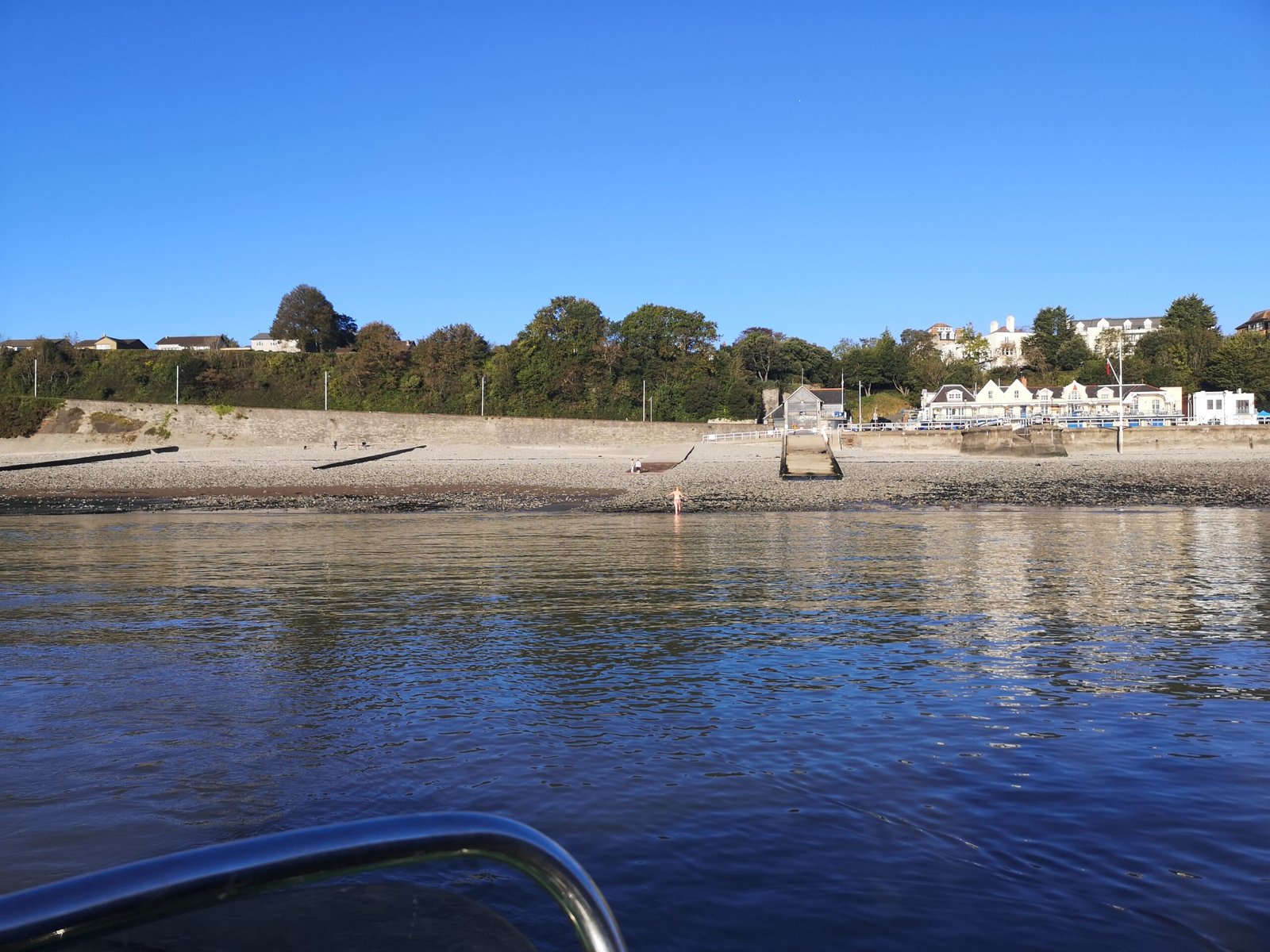
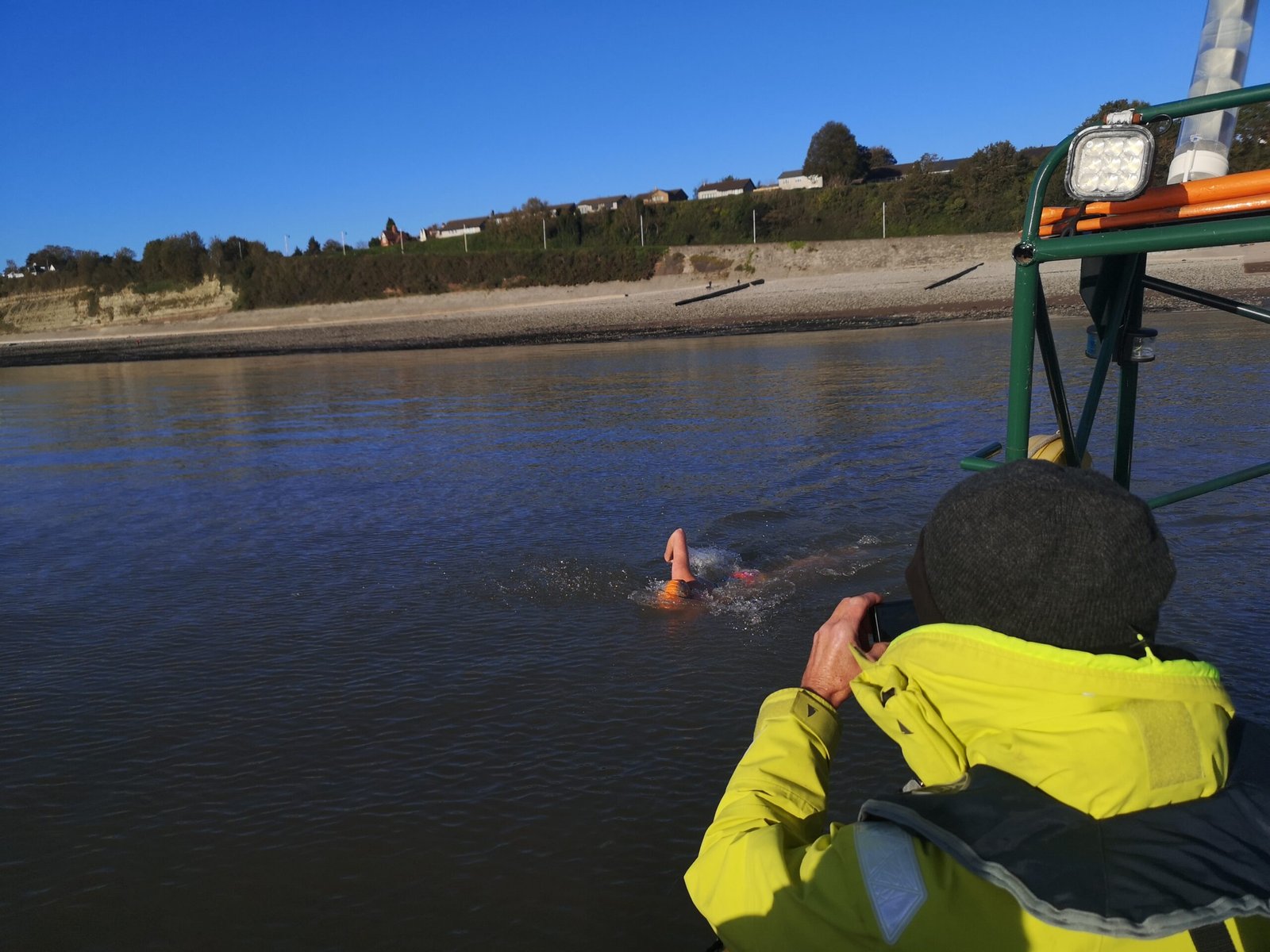
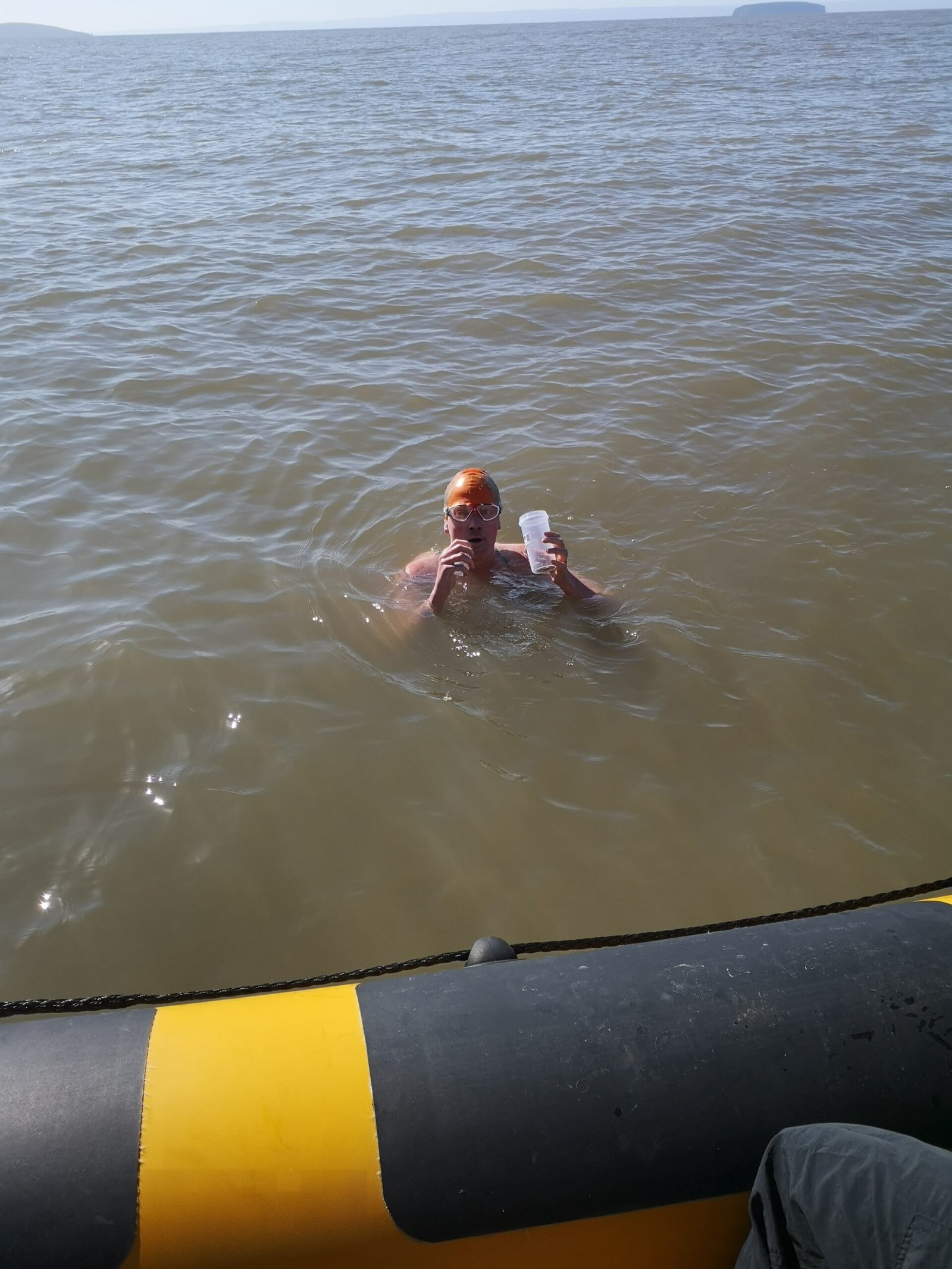
At eight that morning the team met at the marina beneath a clear blue sky. The sea off Penarth was almost flat, although the chill in the air remained. Jo swam ashore and cleared the water; at 08:52 her crossing began. From the boat, Tom noticed a quick glance back towards the pier before she settled into the swim. [5]
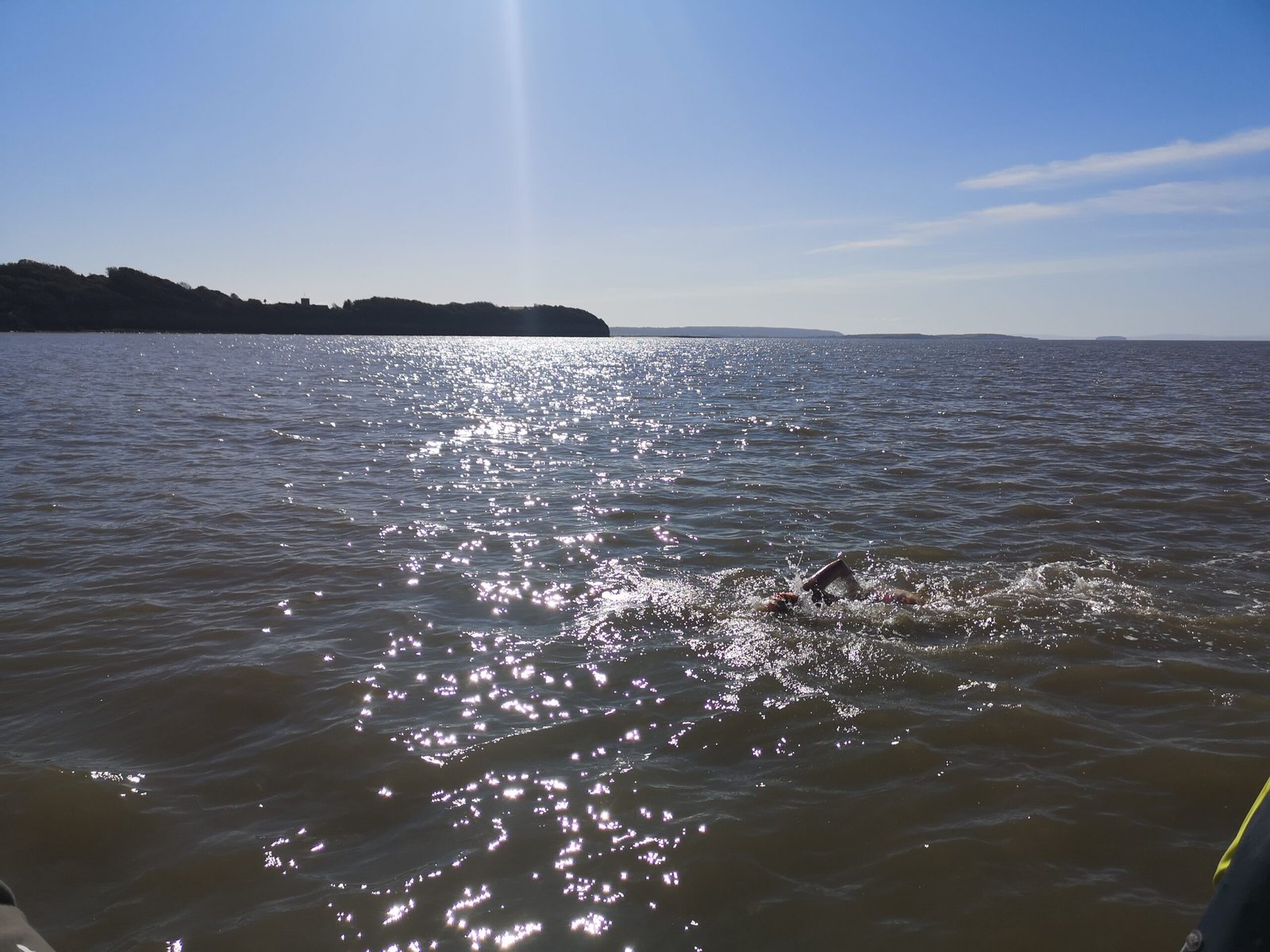
Her stroke rate started at 72 a minute, then eased into the mid-sixties. The water measured 15.5°C near the start and 16.3°C farther from shore. The feared northerly did arrive, bringing a ripple and small rollers, but the observer’s entries describe good conditions. With Penarth receding, Jo could get on with the swimming she had spent weeks hoping to begin. [5]
Warm drinks and a pork pie
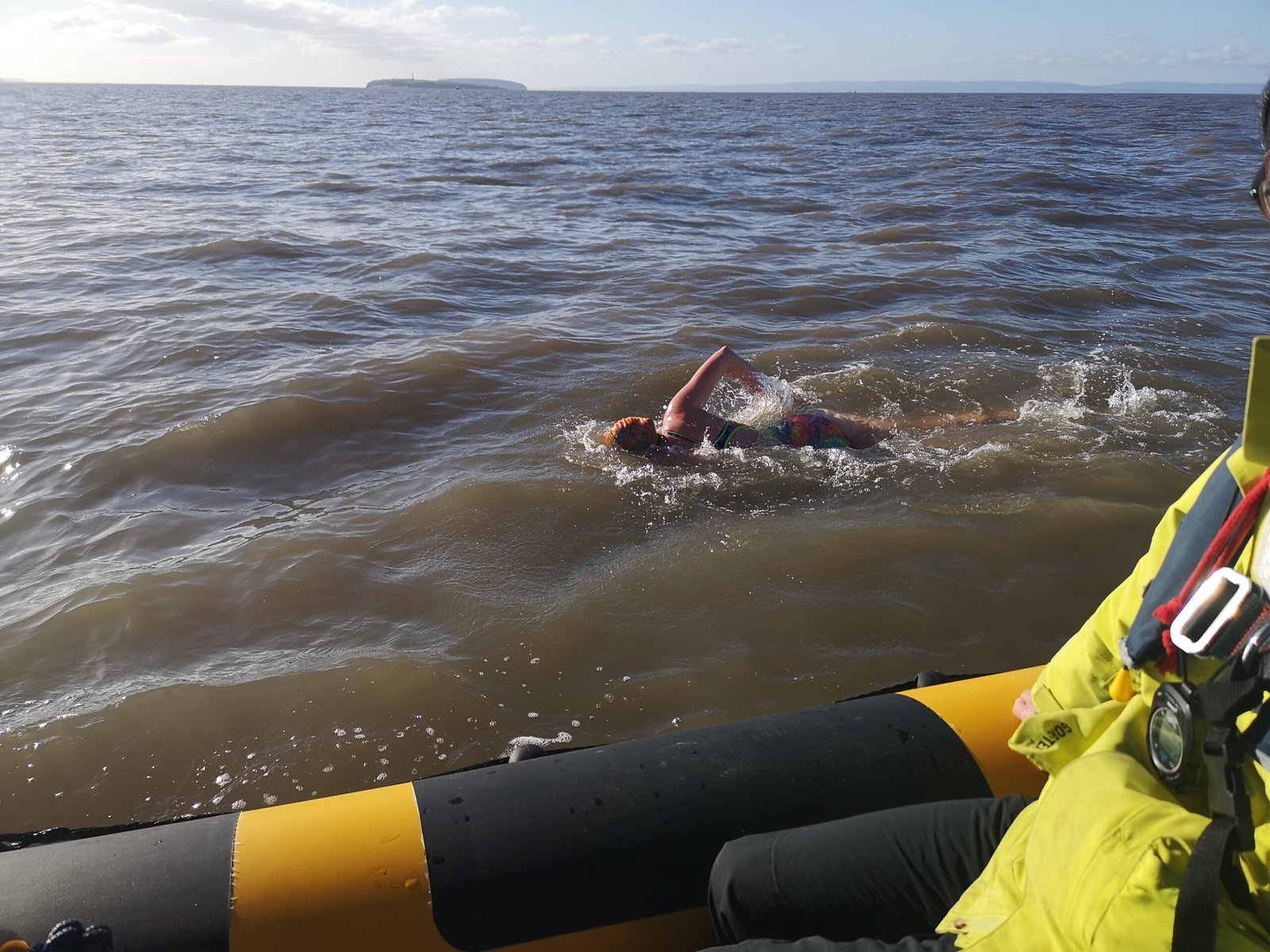
Sunday was better than the forecast had led her to expect. There was sunshine, little wind and a chance to settle. Tony Ball fed her from the RIB X Beat 3; Ceri Davies piloted, and Tom Chapman observed. The MSF record identifies an unassisted, nonstop solo under its rules. [1]
Her first feed did not quite go to plan: a loose bottle lid spilled the drink into the Channel. A replacement arrived, warm and welcome. Later, spotting her father eating a pork pie prompted a request for food at the next stop. The small details in her account give the day its texture: feeds became milestones, and ordinary food briefly mattered as much as the distant shore. [1]
There were frustrations too. Soap used to clean her goggles began irritating her eyes; a spare pair helped. As the swim wore on, her shoulders hurt and shorter intervals between feeds broke up the remaining distance. She began picturing the slipway and the people waiting there. [1]
Reading the water
The route needed attention even on a day of kind weather. At ten o’clock Ceri altered course around a sandbank, where the depth had fallen to 3.9 metres. By 10:20 the tide was slack, with Flat Holm behind them; before long it had turned and they were moving away from the islands. Jo kept her stroke rate in the low to mid-sixties. [5]
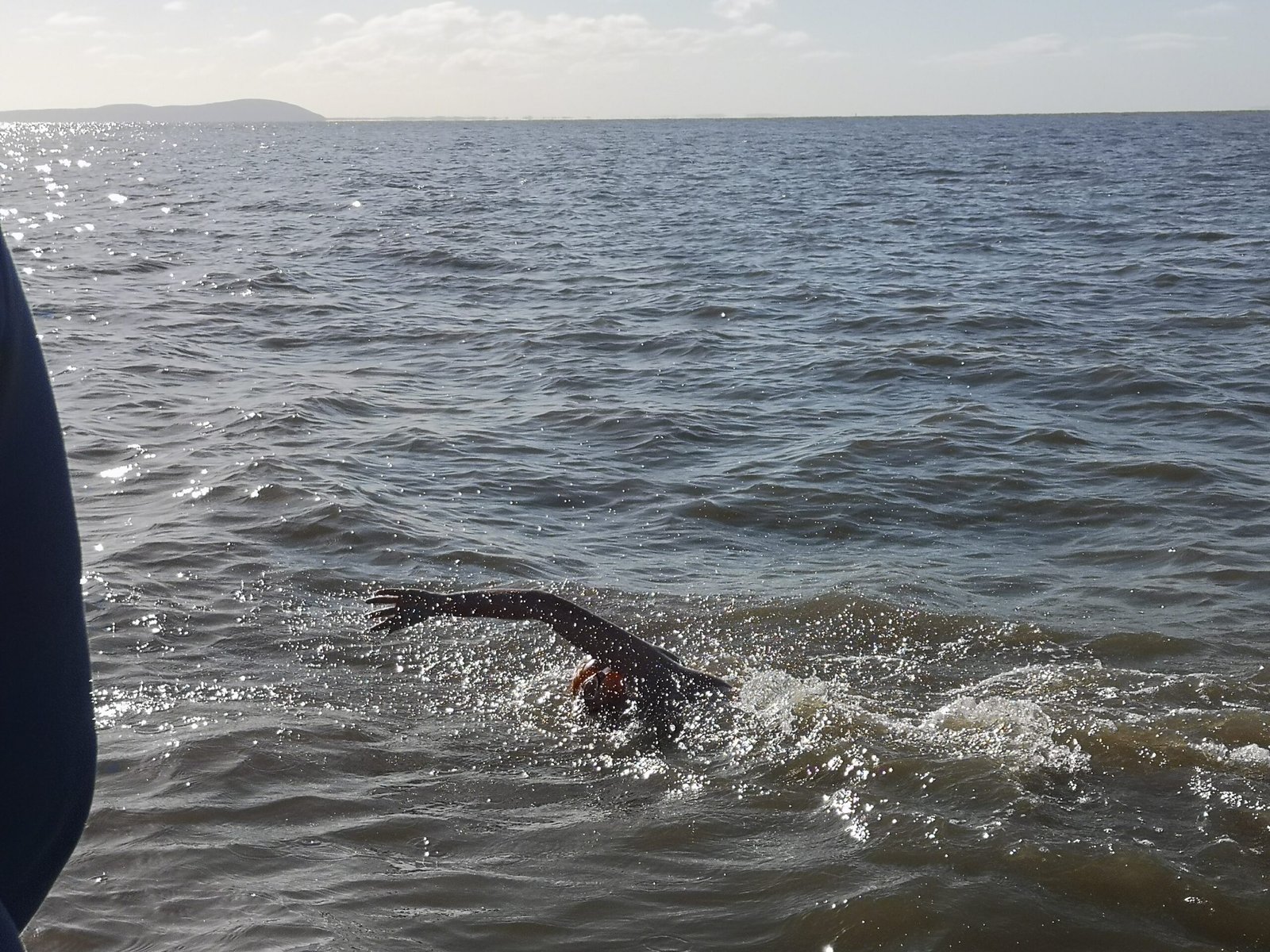
Later, the broadcast shipping forecast sounded rougher than the water around the boat. The log records only a slight chop and, eventually, almost no wind. When Jo described the water churning around her at 13:15, they were again over sandbanks. She was told they were about two and a half miles from the finish and set off strongly after her feed. [5]
The green pier
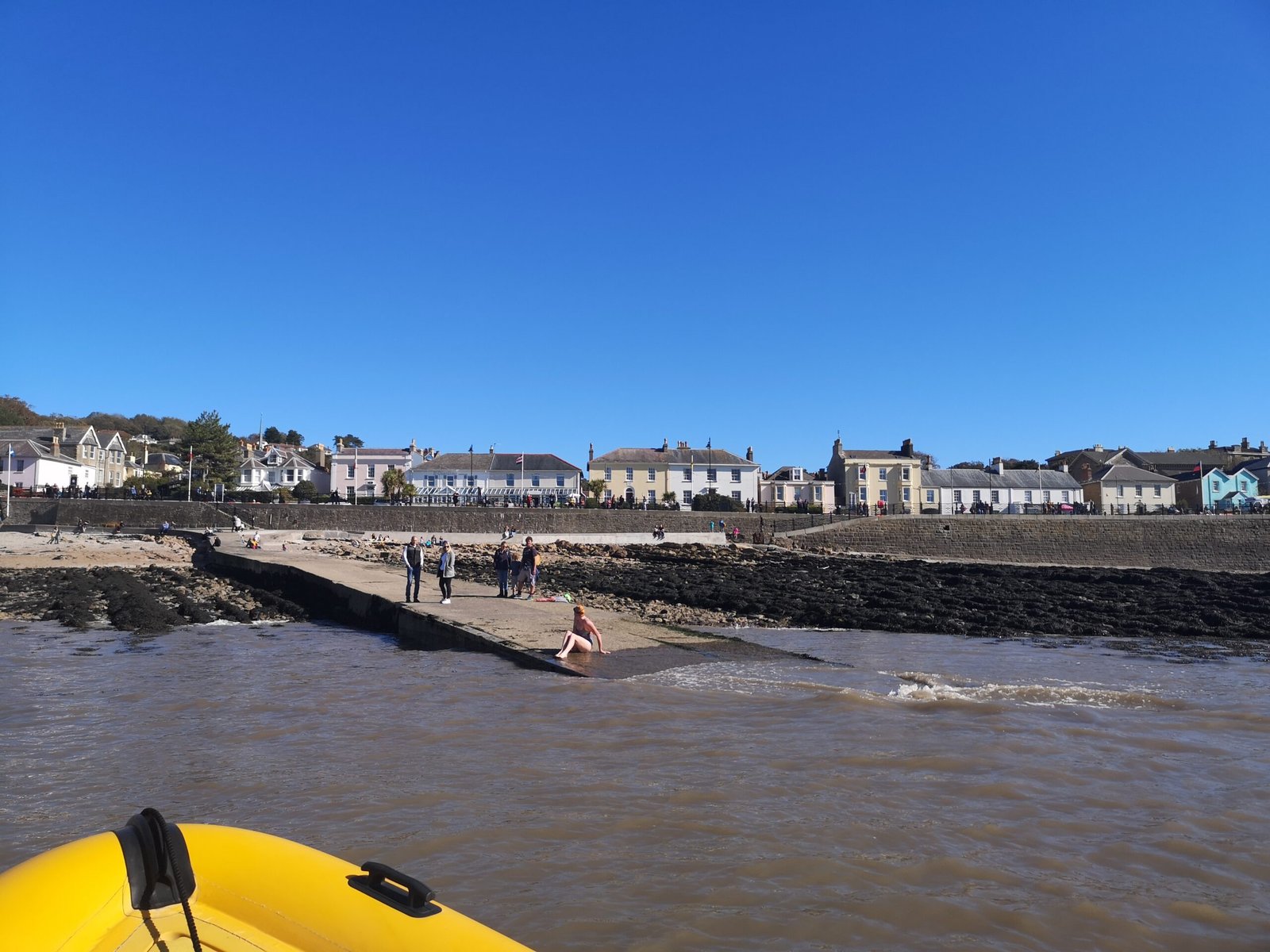
For a long time she could not recognise the finish. What she thought might be a green fence eventually resolved itself into Clevedon Pier. By two o’clock Tom was messaging the Clevedon swimming group to see whether anyone could meet her on the slipway. The wind had almost disappeared, and Jo was still pushing hard. The boat encouraged her towards the slipway, and her father called for her to clear the water. Then the whistle sounded and the swim was complete. [1]
Someone on shore asked where she had come from. Penarth was now the answer to a question asked on the opposite side of the Channel. The uncertainty of the previous day had become a recorded crossing in 5:27:57. [1]
Legacy: one account leads to another
Jo had followed an idea encountered in Alec’s book. Her own swim helped inspire Tom to add Penarth–Clevedon to his 2021 programme, as he later explained in his swimmer’s account. The link runs through books, conversations and days spent on an escort boat: one person’s crossing makes another person’s plan more tangible. [1], [3]
Her 2020 result belongs to that revival, as well as to the route’s record history. It deserves to be remembered with the hesitation and practical setbacks that preceded it, because those were part of getting to the start. [1], [2]
The historical record: notes and discrepancies
The MSF page gives the exact elapsed time as 5:27:57; displayed start and finish clock times are rounded to minutes. Its course-record label describes the 2020 result. Later results exist, so this article does not claim the record still stands. [1], [2]
Earlier career dates here are attributed to Jo’s firsthand narrative; individual official records should be checked before expanding them into a comprehensive career table. The article paraphrases her published account rather than inventing dialogue. [1]
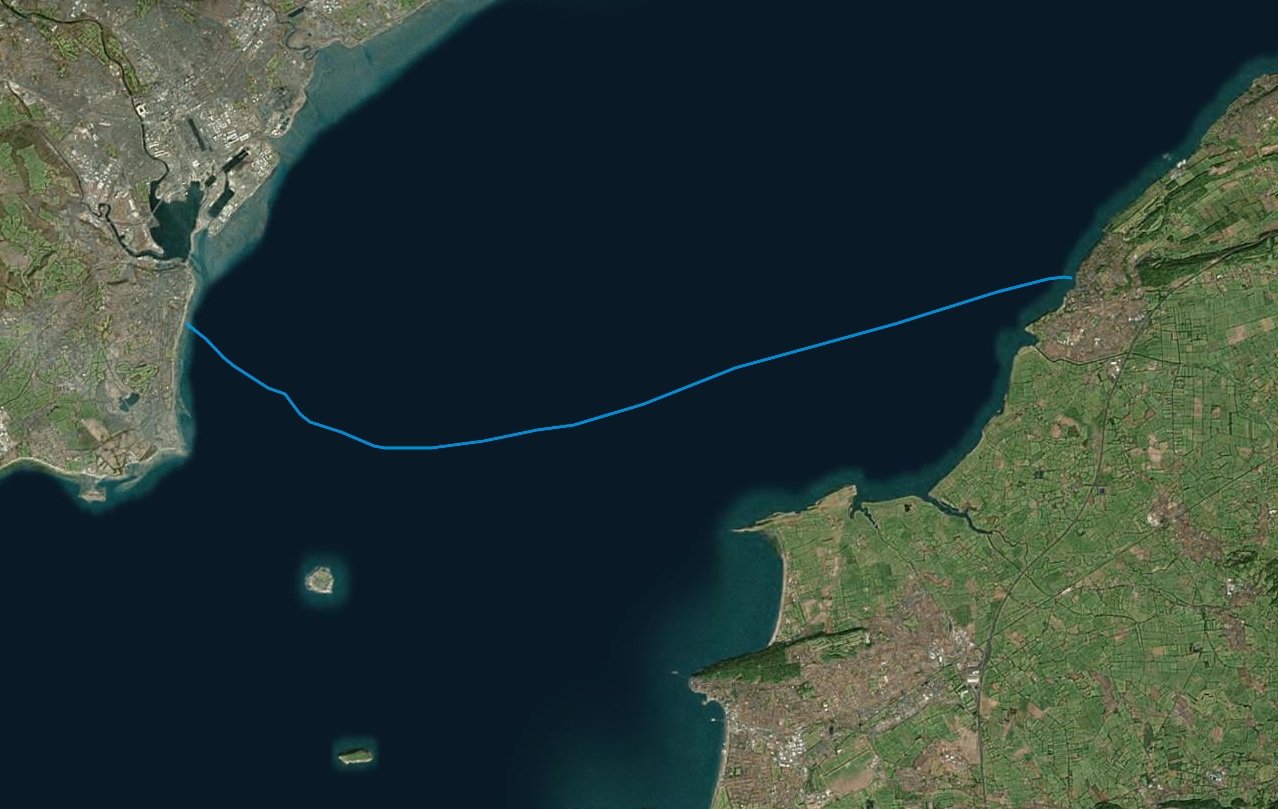
The source CSV supplied for this project contains 67 recorded positions at roughly five-minute intervals, finer than the interval described on the saved page. The conversion preserves the supplied coordinates and does not add shore connections. Its timestamps lack a stated timezone.
Historical research, sources and further reading
- MSF documented swim: Joanne Jones, Bristol Channel, 27 September 2020; participant narrative, team and result. Saved page PDF: original saved in the Monster Swims research archive. Related public BCSA account linked. View public source
- BCSA Penarth–Clevedon route history and later results. View public source
- Tom Chapman: account of his second 2021 crossing and Jo’s influence. View public source
- BCSA individual page: Joanne Jones, reports and media. View public source
- Tom Chapman, detailed observer log, 27 September 2020, supplied as “full report.pdf”. Original saved in the Monster Swims research archive.
- Recorded GPS positions supplied as MSF CSV, converted to GPX without adding or moving points. Download recorded GPX track
Archive material and photographs
Research documents: original saved in the Monster Swims research archive. The seven crossing photographs and route image were supplied by Tom Chapman. Image provenance and any reproduction permissions are addressed in this single note; any third-party rights should be confirmed before publication.
 BRISTOL CHANNEL SWIMMING · HISTORICAL ARCHIVE · 1927–2027