
Route: Penarth to Weston-super-Mare
Date: 15 September 1929
Recorded time: 9:04:20

Harry Luscombe (1894–1964)
Bristol Channel swimmer and inspiration for his granddaughter’s crossing
Introduction
Like many others in the swimming world in the 1920’s Harry Luscombe initially set his sights on swimming the English Channel. Although he made two heroic efforts in 1927 and 1928, the fierce weather conditions meant that he had to abort both attempts. He then turned his attention to the Bristol Channel in 1929; at the beginning of that season, only Kathleen Thomas and Edward Temme had succeeded in making the crossing between Penarth to Weston-super-Mare. You can read later on how Harry was pipped to third place in the Bristol Channel stakes by two teenaged girls. However, he would make a successful crossing and he would be the first person to actually land in Weston itself, between the two piers. We will also tell you about the trials and tribulations that followed his achievement; but Harry’s story does have a happy ending, as he inspired his grand-daughter Jane, to pit her own wits against those Bristol Channel monsters – so she appears in the Monster Swims Historical Project database too!
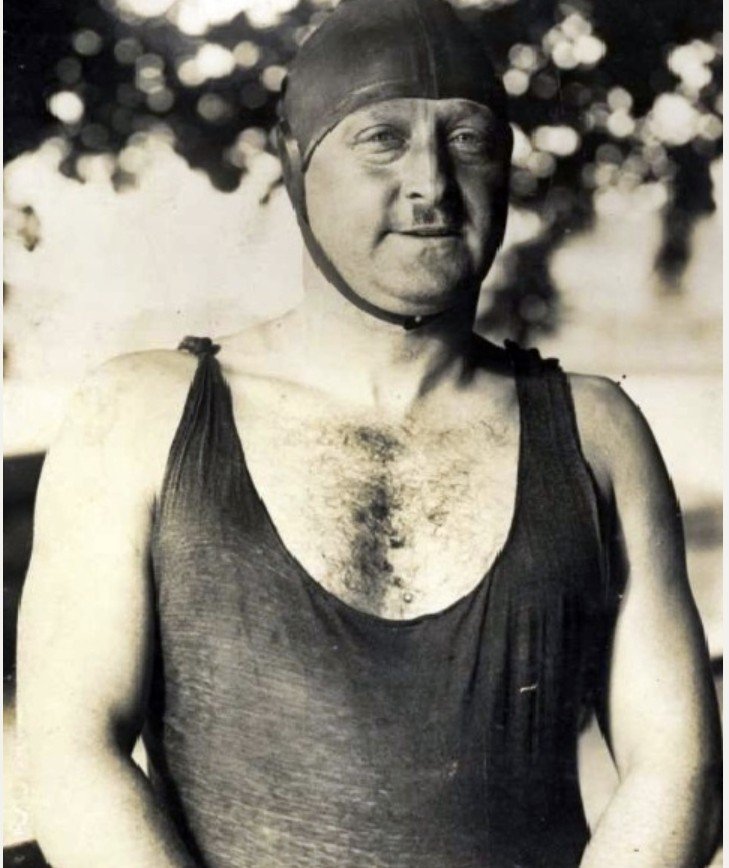
Harry Luscombe’s Family Roots in Devon
Harry Wannell Luscombe was born on 19 July 1894, the son of Leonard Luscombe, a grocer and his wife Eva (nee Wannell) from whom Harry got his unusual middle name. At the time of Harry’s birth, the family were living at Church Cottage in Topsham, Devon, a place that Harry would be deeply rooted in all his life. The 1901 census tells us that 6 year old Harry, along with his younger brother George were still living in Topsham, although now their mother Eva was head of the household: Harry’s grand-father, George Wannell was also living with them.[1]
Ten years later, the 1911 census shows that Eva Luscombe was running the grocery business and 16 year old son Harry was an apprentice tailor. Harry succeeded in his chosen career and by 1921 he was working as a traveller in the tailoring trade for Holland and Company. This was a trade that Harry pursued all his working life, with the 1939 Register recording that he was by then a ‘master tailor’. Harry Luscombe married Emily Harper Low and they went on to have three sons: in 1921 the family were living at 3, The Shand in Topsham – as we said, Harry was a ‘Topsham boy’ through and through. [1]
Early Swimming Achievements
As a child, Harry had ‘smashed his ankle while playing football’ although his grand-daughter Jane Luscombe attributed it to polio; whatever the cause of his injury, he was left with a permanent limp.[2, 3] With the sort of language that today we would consider ‘non PC’, we will see later on, newspaper headlines of his swimming achievements focussing on him being ‘crippled’, ‘deformed’ or even one-legged – the one legged man, was actually his trainer A.L. Matthews. [4,5] With the benefit of hindsight we might speculate that the young Harry perhaps took up swimming to help exercise his injured leg and soon discovered a talent for the sport. He would certainly go on to overcome any disability that the ankle injury had left him with.
Harry became a member of the Exeter Swimming Club and he is pictured with the team, front row, far right in the photograph from 1925.[4] We know from press reports in 1927 that Harry was ‘the Devon [swimming] champion, and that he had got his sights set on swimming the English Channel [6] along with other hopefuls like Edward Temme (who would succeed in both 1927 and 1933.[7]. The half pose picture of Harry in his bathing gear was taken about 1927.[4]
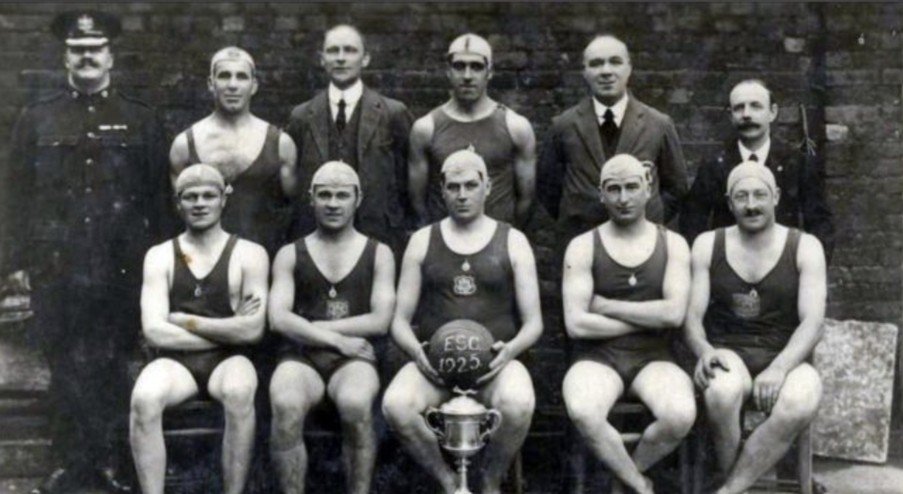
On 7 August 1927 Harry set off from Gris Nez in France heading for England; the press tell us that he had had several delays but ‘finally decided – against expert advice – to make his attempt’ but a ‘south-westerly squall blew up, which completely destroyed all hopes of victory.[8] After nearly nine hours of an ‘heroic battle with the elements the swim was abandoned’ [8]. Although Harry was still strong and eager to continue, despite a bad attack of sea sickness, ‘he had been carried miles out of his course by the wind and waves [and] his trainer wisely decided to take him out of the water. Luscombe pleaded for another chance to pull through, but on the advice of his pilot the swim was terminated exactly eight hours and thirty-eight minutes after it began.’ [8] Other press reports record this as a ‘nightmare’ swim and, causing ‘grave concern whether the small motor launch would weather the turbulent sea … the boat had a great struggle to make the harbour.’ [9]
At Monster Swims, we say, the moral of this tale is – the Skipper is in charge – if s/he says the conditions are ‘no,go’ then their word is law! As for Harry’s attempt, his trainer, Mr Matthews said he was proud of him, he ‘had proved himself a true son of Devon and the sea’. While Harry himself said ‘I did my best to-day and could have carried on for hours longer in spite of the sea sickness and heavy seas, but it was evident that no human being could hope to reach England against such a wind and tide.’ [10]
The next year, on 11-12 August 1928, Harry made another attempt to swim the English Channel, this time from England to France, but after 10 hours 35 minutes in the water, rough seas again forced him to abandon the swim about 5 miles off the French coast. Harry’s wife Emily was in the accompanying motor-boat and both she and Harry suffered from sea-sickness. Back in Dover, a hot bath and a massage soon put Harry to rights. [11]
On the back of these two English Channel swims, we find the Ilfracombe Regatta Committee considering ‘a letter from Mr. H. Luscombe, of Exeter, the well-known swimmer, who offered to visit Ilfracombe on August 21st for a fee of £2 2s plus expenses’. [12] However, the Committee ‘assumed that he would only give an exhibition of the stroke on which he attempted to swim the channel. That being so, he did not think such an exhibition would interest the public very much. He also thought that Mr. Luscombe had not been before the public so much as to be of that interest required for exhibitions.’[12] Harry’s offer was declined and, as Edward Temme (Channel swimmer x2; Olympian x 2 and Bristol Channel x2) would later report, he had found, first-hand, that there was not much money to be gained from channel swimming.[13]
Harry Luscombe’s Bristol Channel Swim
With the 1927 and 1928 swimming seasons in the English Channel not going to plan, Harry decided to make an attempt on the Bristol Channel the next year. Following in the footsteps of Kathleen Thomas (1927) and Edward Temme (1928) Harry was not the only one wanting to go down in the Bristol Channel history books. Local Penarth teenager, Edith Parnell was also keen to make the crossing and successfully swam the Penarth to Weston-super-Mare route (the only one at the time) on 15 August 1929, although like her predecessors, Edith had been carried past the two piers at Weston to land outside the town.[14]
Another Welsh aspirant and another teenager, was Elsie Westonborg who had been born in Swansea and who does not currently appear on the BCSA or Monster Swim databases. She had tried in September 1928 resulting in ‘splendid failure’; the 20’ waves meant she had to be ‘dragged into the launch at considerable peril’. Elsie made another attempt on the Bristol Channel in 1929 and successfully crossed from Penarth to Weston-super-Mare on 12 September, landing at Anchor Head [15,16] Elsie is also getting a rightful place in the Monster Swims Historic Project so look out for her story!
With both these teenaged girls – Edith and Elsie – having pipped 35 year old Harry to Bristol Channel success earlier in the 1929 season, he finally got a favourable ‘swimming window’. With wife Emily away on holiday in Scotland and not aware of Harry’s thoughts (mobile phones being far in the future) he decided to seize the moment. [17] And so, at 6.57 a.m. on 15 September 1929, Harry set out from Penarth ‘under ideal conditions’. [18] Accompanying him in the pinnace were Edith Parnell, fresh from her own successful crossing, together with the president of the Penarth Swimming Club, Mr. G. Taylor: they were both acting as pacing swimmers, joining Harry in the water from time to time.[18] The ideal conditions allowed Harry to make rapid headway but those Bristol Channel monsters wanted to come out to play! When Harry was trying to pass behind Steep Holm he started ‘experiencing great difficulty owing to the fierce currents and [he] suffered from attacks of cramp. Nevertheless, he carried on bravely, and after a two-hour struggle he was clear of the island.’ [19]
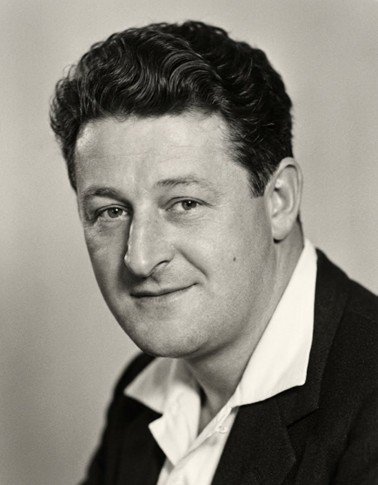
So far, so good, but Harry wanted to land between the old and the new piers in Weston-super-Mare, a feat that none of the four previous Bristol Channel swimmers had managed to accomplish. So could Harry be the one to do it? The press reports from the time tell us that ‘in Weston Bay an even greater ordeal awaited him. … The fierce current swept him to a point opposite Kewstoke. However, his pilot, Mr. Charles Williams, guided him into slightly easier water a few yards from shore, and using every ounce of remaining strength, Luscombe managed to make slow progress. While passing under the old pier the force of the water carried him against the supports, but he was able to get clear and landed’.[19] There were thousands of holiday-makers on the Esplanade at Weston and they gave him a vociferous welcome. One paper goes so far as to say that more than 10,000 people had gathered near the Old Pier where he landed and that ‘hundreds of them had come by charabancs from Exeter’ – Harry’s home crowd were out in force even if the paper was exaggerating the numbers! [17] Obviously fatigued, Harry said with what must have been massive under-statement, ‘I am very groggy and glad the swim is over’ – a sentiment we know all too well at Monster Swims![17]
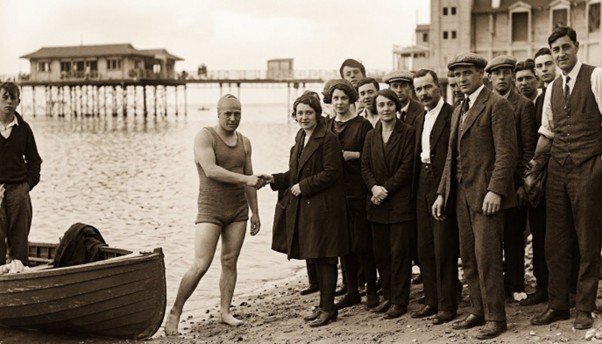
So Harry Luscombe had become the fifth person (and second man) to successfully cross the Bristol Channel from Penarth to Weston-super-Mare with the added accomplishment of being the first to hit the spot in the town between the two piers. Landing at this point had been a ‘grim struggle [because] six cross currents carried him half a mile off his course’ with the currents threatening to sweep him towards Sand Bay, north of Weston [20,21] Harry’s achievement led to excited local press coverage, although the headline of ‘Deformed Exeter Man’s Feat’ seems cringe-worthy today: clearly meaning well, the paper went on to say that using ‘what is known as the American crawl, he soon proved himself a powerful swimmer despite his deformity’ – ouch! [17] But, passing over the language of the day, the article also reported that ‘it is understood that Mr. Luscombe’s swim will not be recognised by the English and Welsh Amateur Swimming Associations because no representative of either body had been invited to watch him’. [17] What a crushing blow and things were only going to get worse.
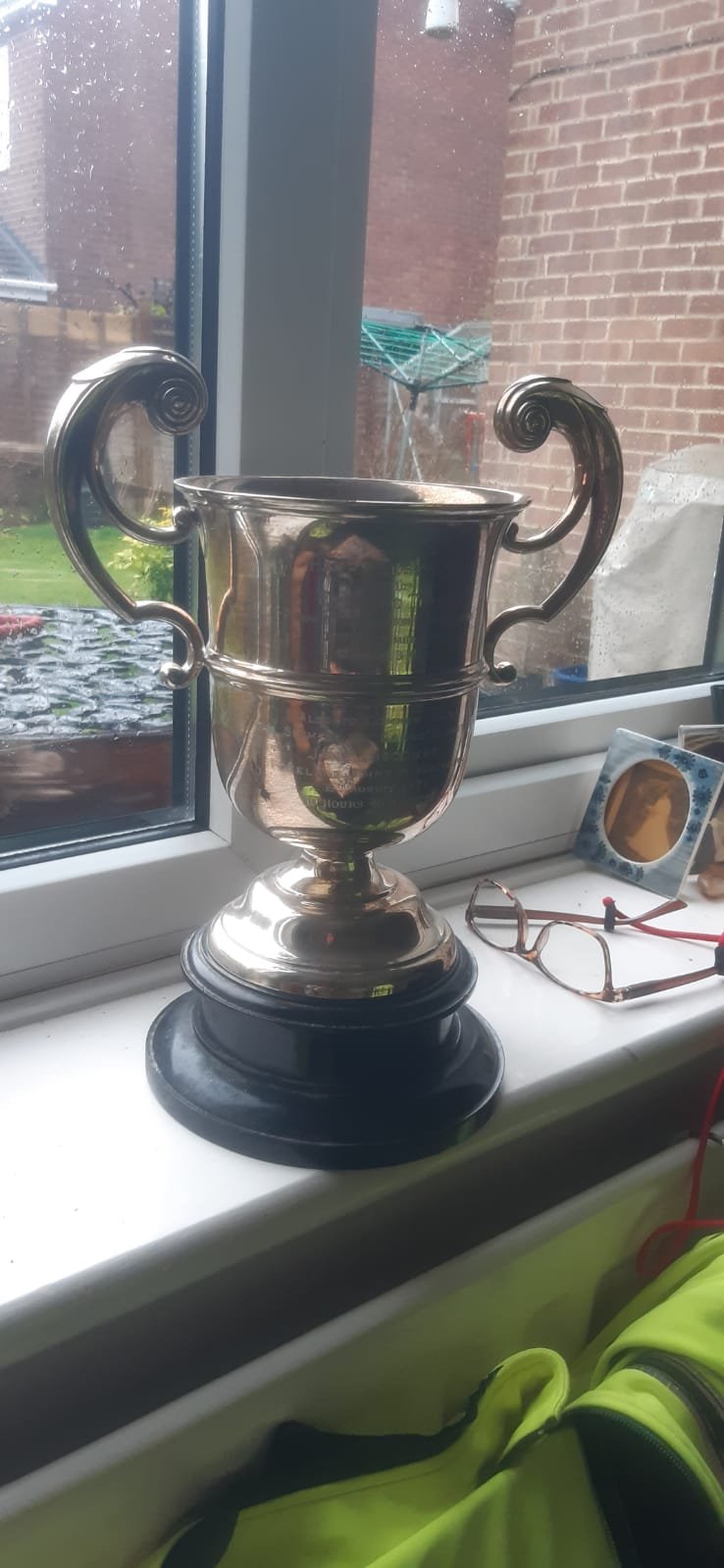
The reason that Harry was so focussed on landing between the two piers at Weston was that the Bristol Evening Times and Echo had offered a trophy for anyone who could achieve this feat before 30 September 1929 which of course he had won (his grand-daughter Jane also thinks that a £10 prize went with the trophy although we have not found anything in the press to support this).[17,3] The evidence for what happened next is elusive, but we know that in January 1930 the Devon Swimmers Amateur Association held its annual meeting with the press reporting that ‘Luscombe’s Cup’ was a key item on the agenda – ‘it was alleged that he had broken the amateur laws by accepting a trophy from a Bristol newspaper for swimming across the Bristol Channel’![22] The next clue we have is from several months later when a short newspaper piece reported that ‘Harry Luscombe … who has expressed his intention of explaining his action in accepting a trophy for swimming the Bristol Channel in contravention of the Amateur Swimming Association laws, telegraphed that an accident prevented his attendance. In his absence, no action was taken.’[23]
Like Kathleen Thomas before him, who was stripped of her amateur status for becoming a swimming teacher at a school (thereby forfeiting her chance of being selected for the Olympics), it seems likely that Harry may have also lost his amateur status, despite the implied postponement in the above report. We cannot say for certain what the impact of all this brouhaha was on Harry, but we know that the offending cup stayed in the family and is now in the possession of Harry’s grand-daughter Jane Luscombe, who kindly shared this image with us.
Harry Luscombe’s Later Life
Despite all the question marks around rules and regulations of the time, Harry seems to have maintained a presence in his local world of swimming although there were no more attempts at Channel swimming – of either the English or Bristol variety. Despite that 1928 rejection at a swimming gala, we now find him feted as ‘the chief attraction’ at a swimming event in Taunton in 1930 where he ‘gave an exhibition of the American trudgeon crawl stroke which he uses during his long swims … [he] was accorded a warm reception.[24]
One of Harry’s other swimming achievements was breaking a record set by Jabez Wolffe for the 17 mile swim between Exmouth and Exeter – he was certainly at home in these Devon waters where he lived all his life.[24] Still living in Topsham where he was born, in 1938 we find him giving a contribution to be broadcast on the Regional and Western radio – his ‘Westward Ho!’ piece was called ‘The Usual Channels and how to swim them’! [25] Jane Luscombe also recalled a publicity race with Johnny Weissmuller as well as work promoting front crawl: while we have found evidence for the swimming stroke demonstrations, as noted above, Johnny Weissmuller is missing in action (perhaps still playing Tarzan in the jungle!)[2].
After a lifetime working as a tailor, Harry Luscombe died on 24 November 1964 in Exeter but he had lit a spark that would flare into life nearly half a century later. Read the next section to find out how he inspired future generations.
Harry Luscombe’s Legacy
While Harry never did manage to conquer the English Channel, the contemporary press reports show just what a valiant effort he made. His biggest success was in swimming the Bristol Channel and managing to land between the old and new piers (a feat his pilot Charles Williams also deserves much credit for). The decision of the English and Welsh Amateur Swimming Associations to not recognise the swim because none of their representatives was present (despite Edith Parnell being there to verify the crossing and the plentiful press coverage of the event) must have been a bitter pill to swallow. Here at Monster Swims, we believe that Harry Luscombe should deservedly be reinstated into the record books and we proudly tell his tale on the Monster Swims Historical Project database.
Although Harry did not live to see it, perhaps his greatest legacy was the inspiration he gave to his own family. His grand-daughter, Jane Luscombe grew up on stories of his Bristol Channel crossing. In 1976, she set about emulating her grandfather although she conquered the longer 16 mile crossing (as the crow flies) between Glenthorne in Somerset to Porthcawl in Wales in a time of 10 hours and 46 minutes. This made her the first woman to swim this route and she also set a new time record when she did it. Today, this route is popular with swimmers from all round the world, especially those seeking to be Original Triple Crown swimmers which this crossing allows them to complete. We wonder what Harry would have made of Jane swimming such a challenging crossing – he certainly would have been a very proud grand-dad!
Discrepancies found through research
Birth year. The draft heading gives 1884, while the genealogy in the body gives 19 July 1894. This edition follows the genealogy, which also fits the census ages cited in the article [1].
Crossing date, direction and time. This article follows the September 1929 newspaper coverage and Jane’s testimony for the date and route. The BCSA family page gives 1929 in its heading and 1920 in its narrative. The earlier Chronicle edition noted a LongSwims index entry with the direction reversed. The draft gives 9 hours 4 minutes 20 seconds, while the BCSA register gives 9 hours 3 minutes [3, 17–21].
Crossing order. The BCSA lists Luscombe as the first man across. This article follows the research chronology, which puts Edward Temme’s crossing in 1928 and places Kathleen Thomas, Temme, Edith Parnell and Elsie Westonborg before Luscombe. The references cited for Elsie [15–16] are from 1928 and document the earlier attempt. A contemporary citation for the reported 1929 success remains to be added.
Leg impairment. The newspaper account attributes Harry’s limp to a childhood football injury. Jane recalled childhood polio. Some press accounts appear to have confused Harry with his trainer, A. L. Matthews [2–5].
Prize and amateur status. Jane recalled £10 in addition to the trophy. The research has yet to confirm the cash prize or establish the outcome of the amateur-status proceedings [3, 17, 22–23].
Historical Research
This article draws on unpublished research by Yvonne Chapman and is part of the Monster Swims Historical Research Project, documenting and preserving the history of Bristol Channel swimming. Please contact Monster Swims with further evidence, comments or corrections.
Sources and Further Reading
Image note: Selected historical photographs may have been AI enhanced for clarity for our readers. Original sources are identified in the references below.
[1] ancestry.co.uk for genealogical information, census records and the 1939 Register
[2] Daily Record, Monday 8 August 1927
[3] Family testimony: private communication with Jane Luscombe, 16 September 2024 Original saved in the Monster Swims research archive.
[4] Channel Swimming Dover, Luscombe, Harry. Archive biography and transcriptions from Dover Express, 5 August 1927, and Leeds Mercury, 2 August 1927 included in this biography, along with two image reproductions, items 2019-164 and 2019-166: https://www.channelswimmingdover.org.uk/content/swimmer/luscombe-harry
[5] Gloucestershire Echo, 16 September 1929, p1
[6] Evening News (Portsmouth), Tuesday 12 July 1927, p5 and Evening Telegraph, 13 July 1927
[7] See Monster Swims Historical Project for more about Edward Temme’s Bristol Channel crossings in 1928 and 1933
[8] Express and South Devon Echo, Monday 8 August 1927
[9] Daily Record, Monday 8 August 1927
[10] Torbay Express and South Devon Echo, Monday 8 August 1927
[11] Liverpool Daily Post, Monday 13 August 1928
[12] North Devon Herald, Thursday 25 July 1929, p8
[13] You can read about Edward Temme’s swimming achievements in the Monster Swims Historic Project database – he was the first man and second person to swim the Bristol Channel
[14] For more about Edith Parnell’s successful crossing of the Bristol Channel in 1929 and her other achievements, see the Monster Swims Historic Project database
[15] Dundee Courier, Tuesday 11 September 1928
[16] Northern Whig, Tuesday 11 September 1928
[17] Western Mail,16 September 1929, p7 contains several photographs of the Bristol Channel swim, two of which are used in this article
[18] London Daily Chronicle, Monday 16 September 1929
[19] Western Daily Press, 16 September 1929, p7
[20] Leeds Mercury, 16 September 1929
[21] Exeter and Plymouth Gazette, Monday 16 September 1929
[22] Exeter and Plymouth Gazette, Tuesday 28 January 1930
[23] Western Morning News, Monday 2 June 1930
[24] Taunton Courier and Western Advertiser, Wednesday 30 July & 6 August 1930
[25] Western Morning News, Thursday 14 April 1938
Further Reading
Bristol Channel Swimming Association, Penarth to Weston Super Mare. https://www.bcswimmers.com/penarth-wsm
Bristol Channel Swimming Association: https://www.bcswimmers.com/theluscombes
 A CENTURY OF BRISTOL CHANNEL SWIMMING · 1927–2027